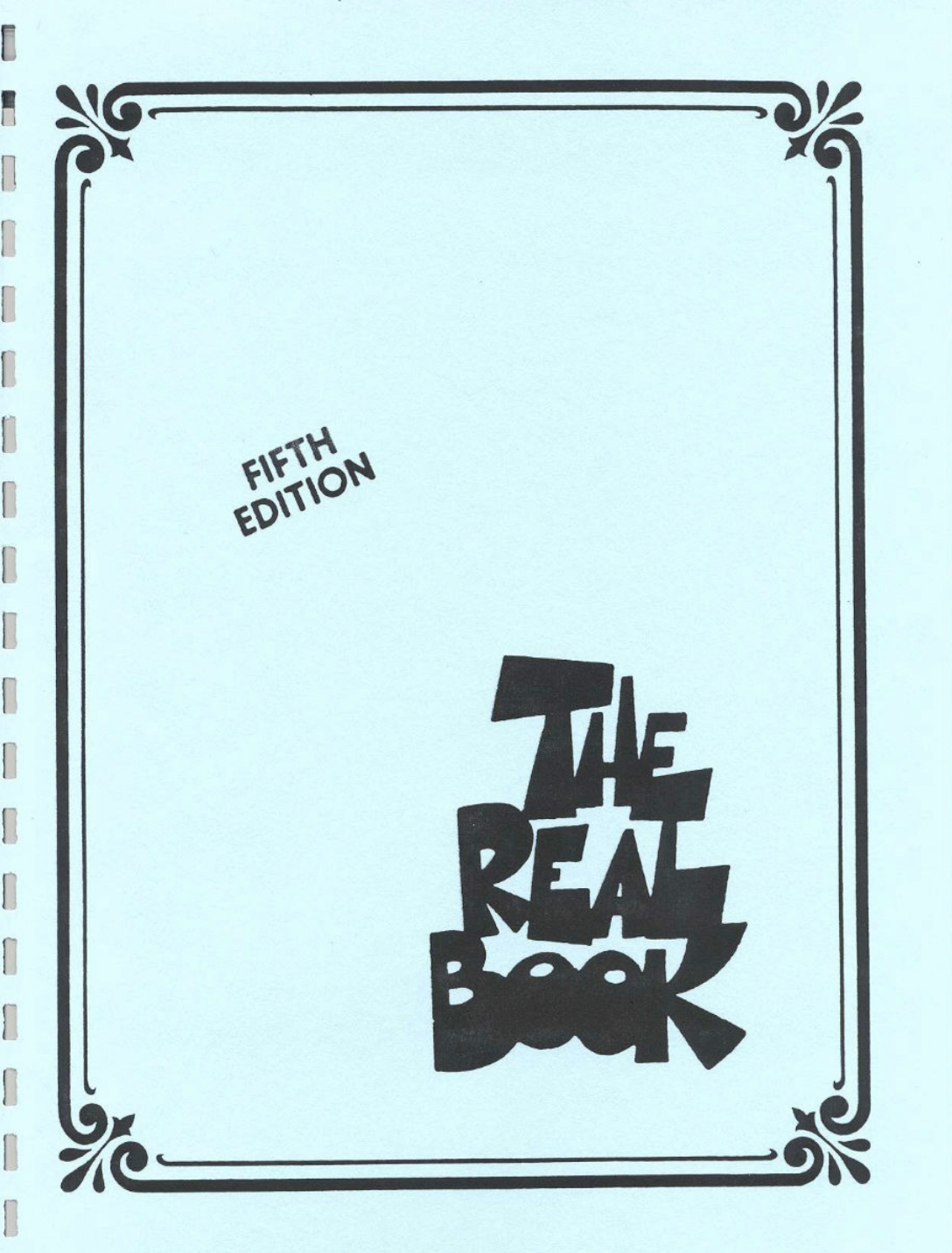
If you’re searching for a Jazz Real Book PDF, you’ve come to the right place!
We’ve put together an easy-to-browse collection of Jazz Real Book PDFs and lead sheets that are available for public use, making it simple to find the jazz standards and charts you’re looking for.
If you already have a particular song, standard, or lead sheet in mind, simply use the search bar in the menu above and enter the name of the tune. We’ve also indexed individual jazz standards separately so you can quickly locate the exact chart you need.
One thing many musicians don’t realize is that different editions of the Real Book can have very different copyright situations. Some older Real Book material may be available for public use, while newer editions, including many Version 6 publications, are protected by copyright and controlled by their respective publishers.
Because of that, we’re unable to provide copyrighted newer editions. In the meantime, feel free to browse the Jazz Real Book PDF resources, jazz charts, and lead sheets that we can legally make available.
Looking for a specific jazz lead sheet or chart? Use the search box in the menu bar above and type in the song title. We’re continuing to index jazz standards individually, so if you don’t see the tune you’re searching for yet, check back as the collection continues to grow.
List of Real Book PDFs
Below you can find all Jazz Real Book PDF files we have access to that are in the key of C. This key is for instruments such as guitar, bass guitar, piano, vocals and any other C instruments.
- Real Book – Volume 1 (Key of C) – Edition 5. (MOST COMMON)
- Real Book – Volume 2 (Key of C) – Edition 5.
- Real Book – Volume 3 (Key of C) – Edition 5.
Below you’ll find all Real Books we have compiled that are in the key of Bb. The following instruments are Bb instruments: Soprano saxophone, Tenor saxophone, Trombone, Trumpet, Flugelhorn, Bass saxophone, bass trumpet, bass clarinet and more.
- Real Book – Volume 1 (Key of Bb) – Edition 5.
- Real Book – Volume 2 (Key of Bb) – Edition 5.
- Real Book – Volume 3 (Key of Bb) – Edition 5.
Next, you’ll find all of the Real Books that are in the key of Eb.The following instruments are Eb instruments: Alto Saxophone, sopranino saxophone, soprano flute, alto trombone, and many more.
- Real Book – Volume 1 (Key of Eb) – Edition 5.
- Real Book – Volume 2 (Key of Eb) – Edition 5.
- Real Book – Volume 3 (Key of Eb) – Edition 5. (Unavailable)
Finally, you’ll find all of the Real Books that are written for Bass or F instruments. (Such as Electric Bass Guitar and Upright Bass).
Additional Real Book PDF documents.
Below you’ll find a list of additional Real Books. These fall under a different category as they are more stylistic aimed and added later on after the original Real Books were brought out.
How To Use A Real Book PDF?
A Real Book PDF is a very very handy thing to have. When I was in college studying music, I dealt with Real Books on a daily basis. From small bands to big bands, to practicing improvising over changes to jam sessions.
If you play jazz for long enough, there is a very good chance that a Real Book eventually becomes one of those things that is always sitting somewhere close to your instrument.
At some point, my physical Real Book literally started falling apart. Pages were getting loose, the binding wasn’t holding up very well anymore, and another problem was that there are so many different Real Books and jazz standards that carrying every book around simply wasn’t practical.
Most of the time I would only bring one Real Book with me.
That worked perfectly until someone called a jazz standard that wasn’t in the particular Real Book I happened to have with me.
Then you’re sitting there trying to remember the melody, asking somebody else if they have the chart, or attempting to figure out the chord progression while everyone else is already getting ready to count the song off.
At some point, having a Jazz Real Book PDF stored on an iPad, iPhone, laptop or another device became more and more popular, and it completely changed how easy it was to bring a large library of jazz lead sheets with you.
Instead of carrying several heavy books around, you can have hundreds or even thousands of pages of jazz charts available on one device.
What I’d like to explain here is how I personally recommend learning, memorizing and actually using the Real Book PDF books and individual jazz lead sheets that we’ve shared here.
Simply having access to a Jazz Real Book PDF is useful, but learning how to use the music inside of it is much more important.
- First you need to make sure that you are aware of some of the most important songs in the jazz world.
If you take a look through one or more of the Real Book PDF books we’ve shared, you’ll immediately notice something.
There are a lot of songs.
A typical Jazz Real Book PDF can contain hundreds of individual jazz standards, melodies, chord progressions and lead sheets. Some collections have somewhere around 300 different songs in a single book.
There’s simply no realistic way that most musicians are going to memorize every single jazz standard in every Real Book, especially when you consider that memorizing the title is one thing, while memorizing the melody, form and complete chord progression is something completely different.
So, the first step is to make a list.
Start with the jazz standards that you are actually likely to hear.
Songs like Giant Steps, Tune-Up, Donna Lee, Someday My Prince Will Come, Stella By Starlight, Oleo and many many more are examples of standards that you may hear called at jam sessions, rehearsals, jazz gigs and college ensembles.
Obviously, that list is much larger than the few songs I mentioned here.
This is also one of the main reasons why we decided to share and organize individual lead sheets from the different Real Book PDF collections whenever possible.
Instead of opening one giant Jazz Real Book PDF and flipping through hundreds of pages, you can search for the individual jazz standard or lead sheet you actually need.
That also gives you the ability to start creating your own personal collection of jazz standards.
You could essentially build your own Real Book containing the songs that you personally play the most.
If you play 30 or 40 standards regularly, having those particular lead sheets organized together can be far more useful than constantly searching through several enormous PDF books.
Because when you’re actually on a gig or jam session, speed matters.
By the time you’ve finally found your chart, the song might already have started.
And depending on the bandleader, it might practically be over.
- Next, you need to memorize the most famous jazz standards.
To be quite honest, yes there are a lot of jazz standards.
Open almost any Jazz Real Book PDF and you’ll see page after page after page of songs.
But the number of standards that get played constantly is much smaller.
Certain songs simply appear much more often than others.
My recommendation is that once you’ve compiled your own list, or used our collection of popular jazz standards and Real Book lead sheets, you begin memorizing both the melody and the harmony.
And preferably the form as well.
Easier said than done, obviously, but it’s something I really really recommend.
Don’t just memorize what chord comes next.
Try to understand why that chord comes next.
Pay attention to the II V I progressions, turnarounds, secondary dominants, rhythm changes, blues forms and other harmonic movements that continue appearing throughout the Jazz Real Book PDF songs you practice.
The more standards you memorize, the easier learning the next standard becomes.
As a professional musician, I’ve received many many many gigs over other musicians simply because I knew songs by heart and wasn’t completely dependent on sheet music.
And I’m not only talking about jazz standards.
I’m talking about Top 40 songs, R&B songs, pop songs, older classics and other music that somebody might suddenly call on a gig.
There’s a really good feeling that comes with someone calling a song and realizing that you already know exactly where the music is going.
Memorizing music really can help you win the musical lottery when it comes to musicianship and getting called for gigs.
A Jazz Real Book PDF should therefore be used as a learning tool, not something that you absolutely have to stare at every second of every performance.
- If you don’t know a song, pay attention, try to memorize the chord progression one cycle in and start to recognize chord progressions.
This becomes incredibly important once you start playing jazz professionally.
If you’ve memorized a lot of standards and played through a lot of Jazz Real Book PDF lead sheets, you’ll begin recognizing the same types of harmony everywhere.
II V I progressions show up constantly.
Secondary dominants show up constantly.
Turnarounds show up constantly.
You begin hearing familiar movements even when you’ve never actually played the song before.
Once you’ve learned more about jazz harmony, you’ll also discover that harmony can be reharmonized.
The chord written on the Real Book lead sheet might not necessarily be the exact voicing the piano player uses.
A bass player might imply something slightly different.
A guitar player might substitute a chord.
The musicians are reacting to each other.
If you’re a bass player, you can absolutely wing parts of a tune by using your ear and visually following the guitar player or piano player.
One thing that has helped me wing songs tremendously is simply learning to really really pay attention while I’m playing.
- Listen to the bass.
- Listen to the piano.
- Listen to the melody.
- Listen to where the harmony sounds like it wants to resolve.
You’d probably be surprised by how often someone in the audience doesn’t notice a small mistake.
Sometimes even the other musicians don’t notice.
Whenever you’re on a small stage or playing inside a jazz club, things happen.
The music can be loud.
Everyone is playing different voicings, extensions, substitutions and rhythmic ideas at the same time.
You CAN get away with stuff.
However, the song is always going to feel much better when you actually know what you’re doing.
And another professional musician can usually tell when you’re completely winging it, especially when your sound is magnified like it is for a pianist, vocalist, horn player or another instrument that is clearly sitting on top of the arrangement.
However, if you can “wing it” for about one time through the head, listen carefully, recognize the form and then understand the chord progression using your ear, you’re already miles ahead of a lot of musicians.
That is where practicing directly from Jazz Real Book PDF lead sheets becomes extremely valuable.
You aren’t only learning individual songs.
You are learning the language that connects those songs together.
How To Become A Good Jazz Improviser And Player?
Above in the previous topic, we talked about everything we could be doing to become more in control of whatever song we are playing.
This is crucial.
Without knowing the melody by heart and understanding the harmony, there really isn’t very much else you can confidently build on top of it.
You can know hundreds of scales, but if you don’t know where you are inside the song, those scales aren’t going to help nearly as much as you think.
It’s absolutely crucial to know these things before you start playing the main theme, comping chords or taking a solo.
That doesn’t mean you need to have every single Jazz Real Book PDF completely memorized.
Obviously that would be ridiculous.
But the standards you actually perform regularly should become familiar enough that you aren’t spending the entire song thinking about what happens next.
Before you can really feel confident enough to steal the show and leave an enormous impression, you need more than simply memorizing one lead sheet.
You also need to know your instrument really well.
- You need to know scales.
- You need to understand harmony.
- You need to be able to hear chord changes.
- You need technique.
- You need rhythm.
And eventually, all of those things need to connect together without you having to consciously think about every single note.
With that being said, I’ve written down a list of some of the most important things I recommend working on if you want to become a really really good jazz musician and get more value out of every Jazz Real Book PDF and lead sheet you practice.
Let’s have a look.
1.Know Your Scales
The very first step you have to do is know all of your scales in every single key.
Not just C.
Not just the easy keys.
Every key.
When you’re playing through a Jazz Real Book PDF, you’ll quickly discover that standards aren’t conveniently written in C major just because C major is easier to visualize.
You need to become comfortable in all 12 keys.
Now, there are hundreds and hundreds of scales out there if you start looking deeply into music theory.
I’m not going to tell you that you need to memorize every strange scale somebody has ever written down.
Instead, I’m going to break down the scales that I think are really really important.
I’ll also explain some of the ways you can change your sound as a jazz player depending on the scale you choose.
Because two players can improvise over the exact same Real Book chord changes and sound completely different simply because of their note choices.
Let’s have a look at the scales I recommend that you memorize.
THE MAJOR SCALE (Septatonic, hexatonic and pentatonic) in Jazz Real Book PDF.
The major scale is probably the most basic Western music scale that exists.
Because of that, it is extremely important to know this scale in every single key like the back of your hand.
When you’re reading jazz standards from a Jazz Real Book PDF, the major scale becomes one of the basic maps that helps you understand melodies, chord functions and improvisation.
Now, if you noticed, I wrote the words septatonic, hexatonic and pentatonic behind the major scale.
In a way, these are three different versions or ways of approaching the major scale.
I’ll show you exactly what each one looks like and explain why I think all three are useful.
Septatonic
The septatonic major scale is important because it’s the foundational seven note major scale.
It is used in basically every style of Western music, from classical music, to jazz, to pop, rock, film music and everything in between.
If we use the C major scale as our example, the notes are:
C D E F G A B
Seven notes.
If you’ve opened a Jazz Real Book PDF and started analyzing jazz standards, you’ve already seen these notes functioning in countless different ways.
The better you know the major scale, the easier it becomes to understand the chords that are built from it.
Hexatonic
This is one of my absolute favorite scales.
I actually like using it even more than the pentatonic scale in a lot of situations.
All the major hexatonic scale really is, is the major septatonic scale without the 4th degree.
So if we take C major:
C D E F G A B
And remove F, which is the fourth degree, we get:
C D E G A B
That gives us the C major hexatonic scale.
I love this sound because it reminds me of sounds you hear from players such as Keith Jarrett and Bill Evans.
It has a really open sound.
To my ears, it sits somewhere between the freedom of the pentatonic scale and the complete sound of the seven note major scale.
That’s part of what makes it so useful when improvising over chord changes from a Jazz Real Book PDF.
You still get the seventh degree, which gives the scale a little more harmonic information, but you remove the fourth degree.
The fourth can sometimes become a note that clashes depending on the chord underneath you.
Taking it away can make improvising feel much more open.
Pentatonic
The classic major pentatonic scale is essentially the major hexatonic scale with another note removed.
This time, we remove the seventh degree.
So if we were in the key of C major, our C major pentatonic scale would be:
C D E G A
Those five notes are incredibly useful.
The pentatonic scale is everywhere.
Jazz, blues, rock, pop, gospel, R&B and countless other styles use pentatonic sounds constantly.
If you are just beginning to improvise over Jazz Real Book PDF chord progressions, the pentatonic scale is also a really useful way to start creating melodic ideas without feeling like you have too many notes available.
Conclusion For The Major Scale
For me, the hexatonic scale is often the way to go when you want to play more freely without worrying quite as much about accidentally sitting on a difficult note.
But it is really good to know all three versions.
So practice all of them.
Practice the septatonic version.
Practice the hexatonic version.
Practice the pentatonic version.
And most importantly, practice them in all 12 keys.
Don’t only run the scales up and down either.
Open a Jazz Real Book PDF, find a jazz standard you know and actually try using these different sounds over real harmony.
That is when the scale stops being an exercise and actually becomes music.
It is also important to know that these three basic versions of the major scale have similar concepts available when dealing with minor harmony.
They look a little bit different, so let’s have a look at that right now.
THE MINOR SCALE (septatonic, hexatonic and pentatonic). Related to the Jazz Real Book PDF.
Septatonic
Just like the major scale, the septatonic version is the complete seven note version.
For the natural minor scale, we can break the formula down like this:
1 2 b3 4 5 b6 b7
If we were in the key of C minor, the notes would be:
C D Eb F G Ab Bb
Once you begin analyzing minor-key jazz standards inside a Jazz Real Book PDF, knowing these scale degrees becomes very helpful because you stop seeing everything as disconnected individual notes.
Instead, you begin seeing functions.
- The b3 tells you something.
- The b6 tells you something.
- The b7 tells you something.
That makes transposing and understanding harmony much easier.
Hexatonic
The minor hexatonic version is essentially our minor septatonic scale with one note removed.
In this case, we remove the 6th degree.
For C natural minor, that means taking away Ab.
Why are we removing the 6th degree from the minor version while we removed the 4th degree from the major version?
Because relative major and minor scales are connected.
Let me explain.
Every major scale has a relative minor scale.
You can almost look at them like siblings or family members, which is why we call them relative.
The relative minor of C major is not C minor.
It’s A minor.
C major contains:
C D E F G A B
A natural minor contains:
A B C D E F G
They are the same notes.
We simply hear a different note as the tonal center.
So, if the C major hexatonic scale removes the fourth note, which is F, and we look at the relative A minor scale, that same F is the sixth degree.
- A is 1.
- B is 2.
- C is b3.
- D is 4.
- E is 5.
- F is b6.
So we are removing the same actual note from the collection.
It’s all about function.
This is the kind of theory that becomes much easier to understand once you start applying it to actual jazz standards instead of only looking at scales on a piece of paper.
Grab a song from a Jazz Real Book PDF and start looking for these relationships.
Pentatonic
The minor pentatonic scale follows the exact same general principle as the major pentatonic scale.
The relative major and minor pentatonic scales use the same collection of notes, but the tonal center changes.
If we look at the C major pentatonic scale, we have:
C D E G A
We know that the relative minor of C major is A minor.
So if we take the exact same collection of notes and begin hearing A as our root, we have:
A C D E G
That gives us the minor pentatonic formula:
1 b3 4 5 b7
That is one of the most useful collections of notes you will ever learn as an improviser.
Once again, don’t just memorize the formula.
Find minor passages and minor jazz standards inside your Jazz Real Book PDF collection and actually practice making music with it.
THE ALTERED SCALE (Use in the Jazz Real Book PDF list)
The altered scale is the holy grail of jazz.
At least, it can feel that way once you finally understand how to use it.
The altered scale is generally used over dominant harmony, particularly dominant chords containing altered tensions.
As you work through advanced jazz standards and Jazz Real Book PDF lead sheets, you’ll see dominant chords everywhere.
Primary dominants.
Secondary dominants.
Extended dominant movement.
Dominant chords resolving by fifth.
Dominant chords being used in turnarounds.
Once you start hearing them, you’ll realize how important the dominant sound is to jazz.
Essentially, if we were to use G7 as an example, we could use an altered sound over several different versions of G dominant that you might come across in a jazz chart.
For example:
- G7
- G7(b9)
- G7(#9)
- G7(#11), although personally I don’t particularly love the altered scale sound here and would often rather use a dominant Lydian type of sound depending on the context.
- G7(b13)
- G7(b9, b13)
- G7(#9, b13)
There are several other possible combinations.
You might also see dominant chords with a #5, different ninths and other alterations.
Depending on the sound I want, I might choose another scale instead.
This is one of the most important things to understand about jazz improvisation.
There is rarely only one possible answer.
The chord symbol inside your Jazz Real Book PDF gives you information, but you still have musical choices.
Now, it’s important to know that while jazz is happening in real time, you can make choices that are slightly different from the musicians accompanying you.
It would obviously be really cool if the pianist accompanying you played an altered dominant voicing underneath you while you were playing an altered scale.
Everything would reinforce the same sound.
But that doesn’t mean you are forbidden from creating that altered color yourself if the pianist is playing something more basic.
You can sometimes create the tension through your own melodic line.
The scale itself gives the harmony a different effect.
This is one of the reasons why I recommend practicing scales over actual jazz standards instead of only practicing them over one chord forever.
Use the Jazz Real Book PDF library and find dominant chords inside actual songs.
Stop on them.
Loop the progression.
Listen to what happens when you use different tensions.
Once you learn the altered scale, it’s also important to realize that you can create hundreds of different melodic combinations and patterns from the notes.
You don’t need to constantly play the entire scale from bottom to top.
In fact, you probably shouldn’t.
- Take three notes.
- Take four notes.
- Create a pattern.
- Change the rhythm.
- Start on a different scale degree.
- Skip notes.
- Repeat notes.
- Resolve into the following chord.
Turn the scale into actual language instead of making your solo sound like you’re practicing an exercise.
Technically, the altered scale is often described as having no true avoid notes when it is being used over the appropriate altered dominant harmony.
In my opinion, the #11 can sometimes function almost like an avoid note depending on the context and where you place it rhythmically.
But we’ll leave that one up for debate.
Actually, try taking it out while you’re playing and listen to what it does.
Then put it back in.
That is the best way to learn.
Use the Jazz Real Book PDF library that we’ve created here, pick a jazz standard with dominant harmony, and start experimenting with these sounds yourself.
Conclusion
Having access to different Jazz Real Book PDF books can be a really really helpful thing for any jazz musician.
Whether you are learning your first jazz standards, studying music in college, preparing for a gig, practicing improvisation, learning chord progressions, searching for a particular jazz lead sheet or simply trying to expand the number of songs you know, having a large Real Book PDF collection available makes the process much easier.
But remember that the PDF itself is only the starting point.
The ultimate goal should be learning the music.
Use the Jazz Real Book PDF to study the melody.
Learn the chord changes.
Analyze the harmony.
Recognize the II V I progressions.
Practice your major, minor, pentatonic, hexatonic and altered scales.
Listen to recordings of the standard.
Then eventually try putting the chart away and playing the song from memory.
The more jazz standards you learn, the easier it becomes to recognize the musical language that appears throughout other standards.
That is where a collection of Real Book lead sheets becomes more than just a collection of sheet music.
It becomes a library you can actually use to become a better jazz musician.
Use this site and our Jazz Real Book PDF library as you please, explore the individual jazz charts and standards we’ve indexed, and if you have any questions, please feel free to leave a comment in the comment section down below.
Also, if you’re able to leave a review using our ranking and rating system down below, we would really appreciate it.
The more feedback and reviews we receive, the better idea we’ll have of what musicians are searching for, which Jazz Real Book PDF resources are most useful, what lead sheets people want to find, and how we can continue improving the experience for everyone who visits the site.